The 5 Biggest Takeaways from Improve SF 2026
From AI agents to the future of payments, here are the 5 biggest takeaways from Prove's Improve SF 2026, with insights from Meta, PayPal, Uber and more.

Key takeaways
- Trust has to start with the human. Agents have no history of their own, so trust has to begin with a verified person and travel with the agent.
- Identity is a growth multiplier. Getting identity right does more than stop fraud. It unlocks growth - allowing companies to personalize offers and launch new products safely.
- Blocking AI agents only buys time. Businesses that let trusted agents in will win customer loyalty.
- Liability is still up for discussion. When an agent gets a purchase wrong, nobody has agreed yet on who’s accountable.
- The fraud prevention playbook needs to be rewritten. Signals built around human behavior break down with agents, so trust needs a verifiable link back to a real person.
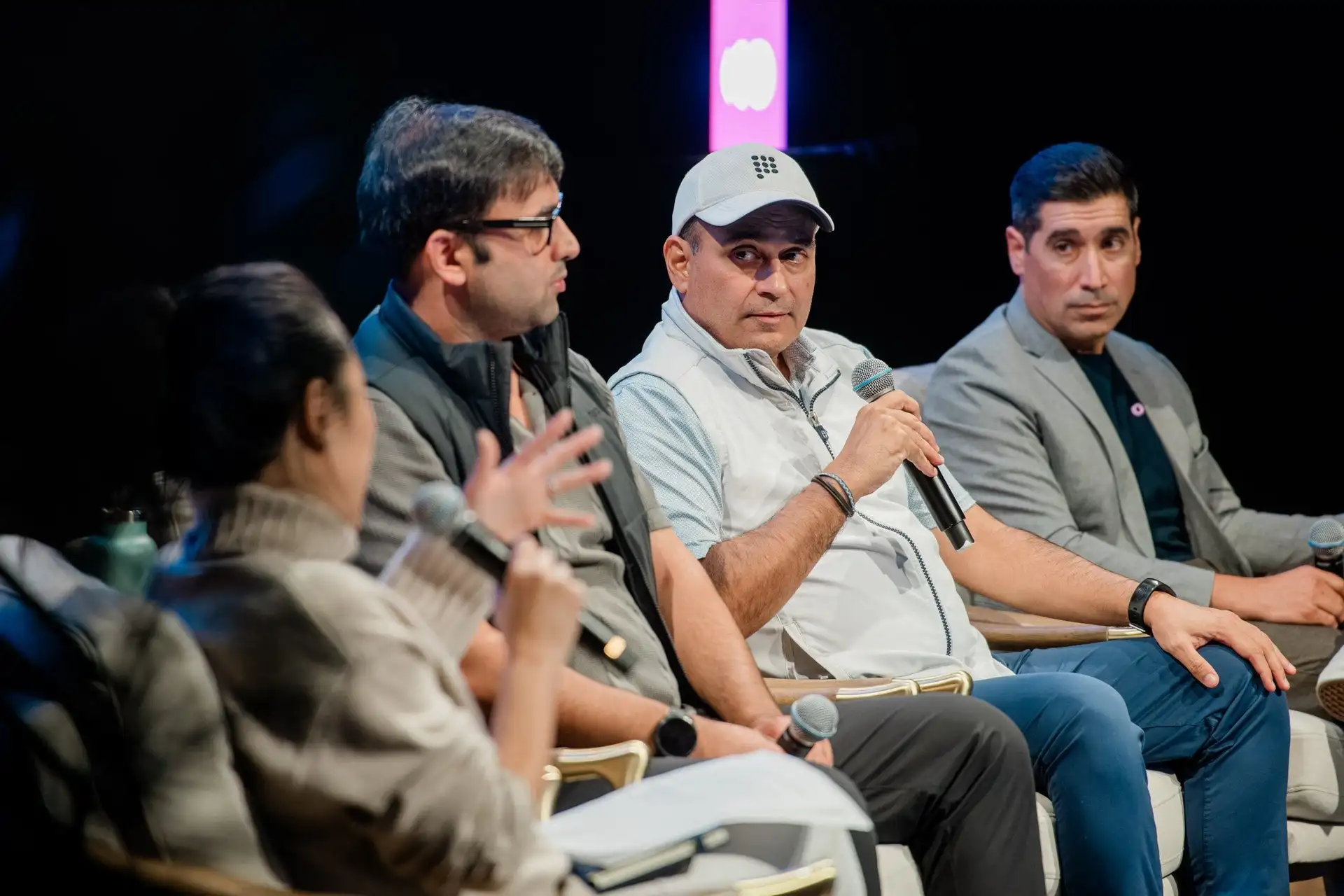
Prove took over San Francisco's Exploratorium for Improve SF, our first time bringing Improve to the West Coast. Leaders from Meta, Uber, PayPal, Coinbase, Credit Karma, Circle, Intuit, Alloy, HealthEquity and Spinwheel took the stage, along with fintech author Dave Birch and Prove’s CEO, Rodger Desai. Five sessions, and one theme that kept re-emerging: AI agents are already buying, booking and moving money - identity plays a critical role.

The ground is moving fast. In 2024, bots made up 51% of all web traffic, according to Imperva. During the 2025 holiday season, traffic from generative AI tools to U.S. retail sites jumped 693% year over year, according to Adobe. Agents are shopping, booking and moving money for real people - knowing who’s on the other side of a transaction is more challenging than ever.
Building the identity layer to enable an agentic economy is what Prove has been working on - and it’s why we brought this group together. Eric Woodward, who helped build Zelle and moderated our fraud panel, summed up how fast things are changing:
“Everything you hear today is almost assuredly gonna be out of date a year from now.”
That’s exactly why these conversations can’t wait.
1. Trust has to start with the human
The opening keynote, The Evolution of Digital Trust in an AI World, challenged attendees to rethink what it means to establish trust in an increasingly agentic world.
Prove Chief Product Officer Ori Snir posed a fundamental question: who are you? In the age of AI, that question is becoming more complex. Who does an AI agent represent? What is it authorized to do? And how can we verify that authority?
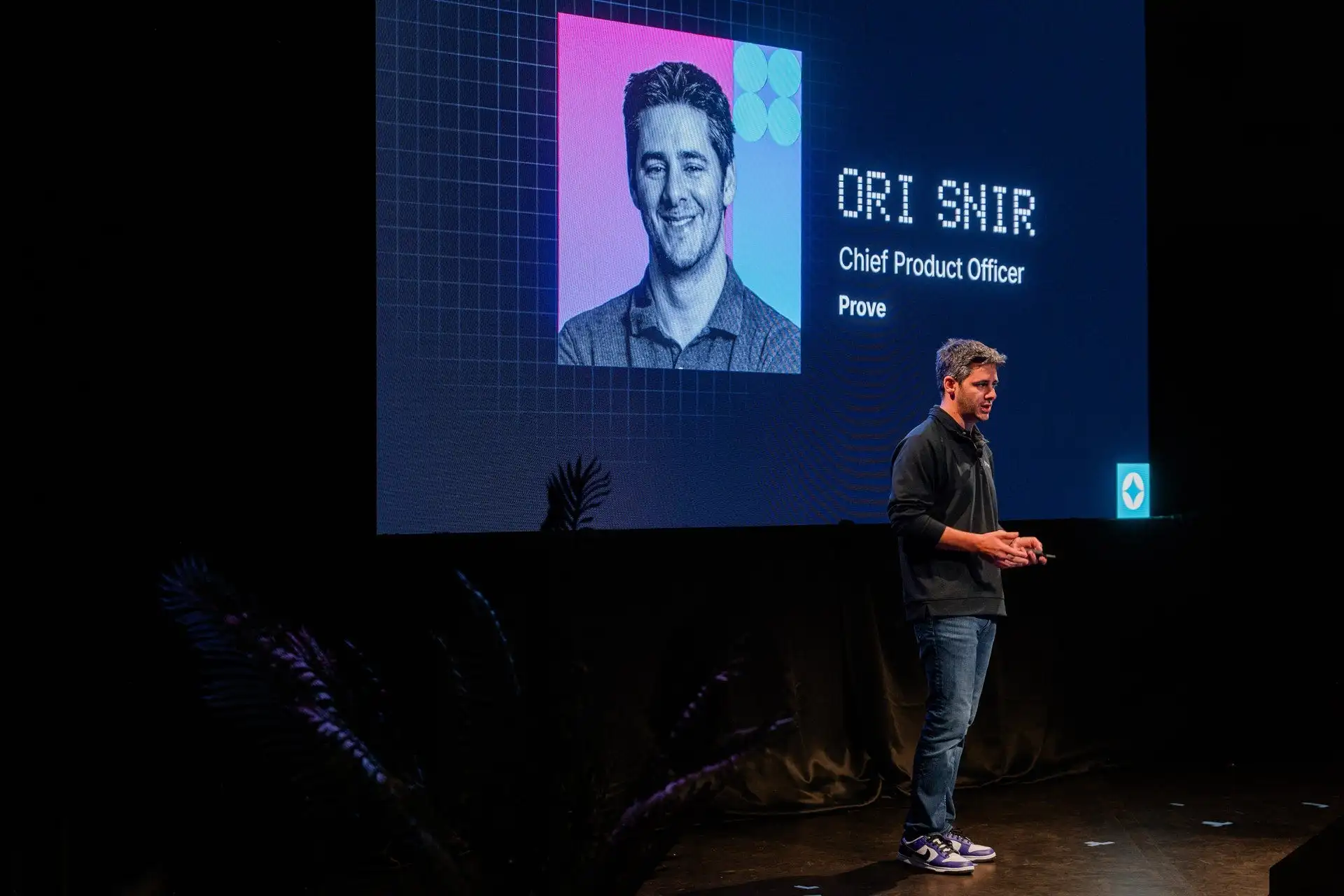
Unlike humans, AI agents can be created and deployed in minutes, often without an established identity, history, or reputation. But the people behind those agents have something AI can't manufacture: a verifiable history of identity and trust. The opportunity is to extend that trust from humans to the AI agents acting on their behalf.
Ray Afara, who leads Growth Products at Prove, explained:
"AI can generate a face. It can generate a voice. It can synthesize a document, but it can't go back in time and generate a manufactured history."
Prove is already building toward that future. The keynote highlighted how our latest innovations in authentication and onboarding are laying the groundwork for trust that travels, from people to platforms to AI agents.
Expanding passwordless authentication globally: Prove's Mobile Auth now supports carrier-based phone possession verification in 10 additional countries across Europe, Asia, and Latin America, extending coverage to approximately 2 billion more devices. This enables seamless authentication without SMS one-time passcodes, reducing friction and costs. With these enhancements, Prove customers are achieving a 56% reduction in OTP volume and 32% annual authentication cost savings with Unified Auth.
Accelerating frictionless onboarding: Looking ahead to 2027, Prove is expanding its Pre-Fill capabilities to help more legitimate customers move through onboarding without unnecessary challenges. Planned innovations include support for sole proprietors in business onboarding and new commerce platform integrations.
Together, these advancements represent more than improvements to today's digital experiences. They're foundational building blocks for a future where identity, authorization, and trust must extend beyond the human to the AI agents acting on their behalf.
2. Identity is a growth multiplier
Many companies look at identity as a function of fraud and compliance. In The Trust Dividend: The Upside of Getting Identity Right, Prove CMO Ashley Kiolbasa and leaders from Meta, Uber, Credit Karma and Circle made the case that it belongs in the growth plan.
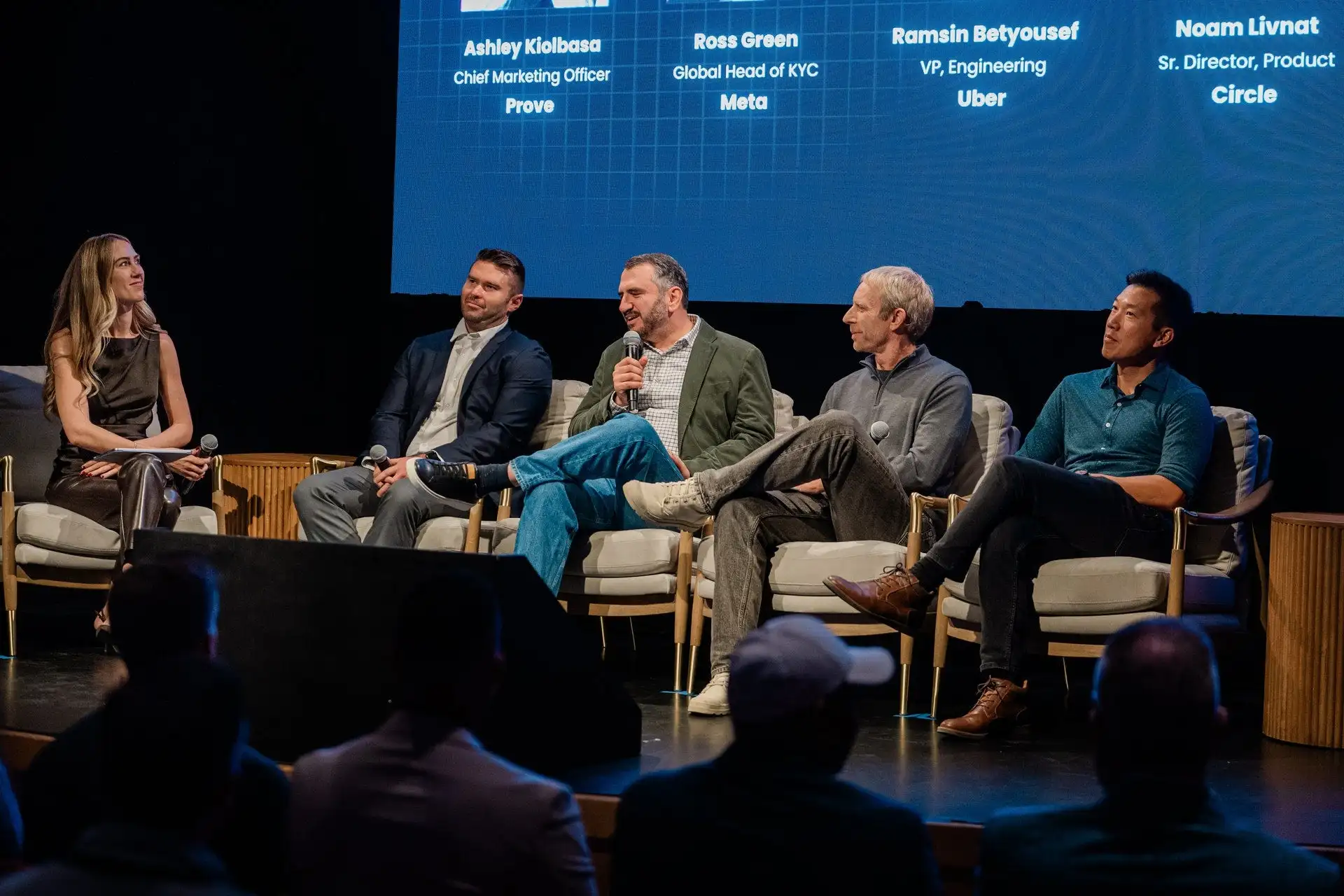
The numbers were hard to argue with. At Credit Karma, an authenticated member is worth about ten times more than an anonymous visitor, because knowing who someone is lets them personalize offers. Uber judges its identity work by what it lets the company launch safely, like Uber Teens.
There was a reality check too. Circle's Noam Livnat put it in four words:
"Identity is not integrity."
Accounts get sold. Good users go bad. Meta’s Ross Green called it the “long con”: behave for months, build trust, then cash it in. A single check at sign-up won’t catch that. Identity has to persist past onboarding, across every login, transaction and handoff for the life of the account.
3. Should you block AI agents?
For years the playbook was to spot the bot, keep it out. Now some of those bots are your best customers' agents. That tension drove The Age of Artificial Users: Fraud, Bots and the Cost of Not Knowing, where Eric Woodward got frontline answers from Coinbase, Alloy and HealthEquity. Their take on blocking: it buys you time, and that's about it.
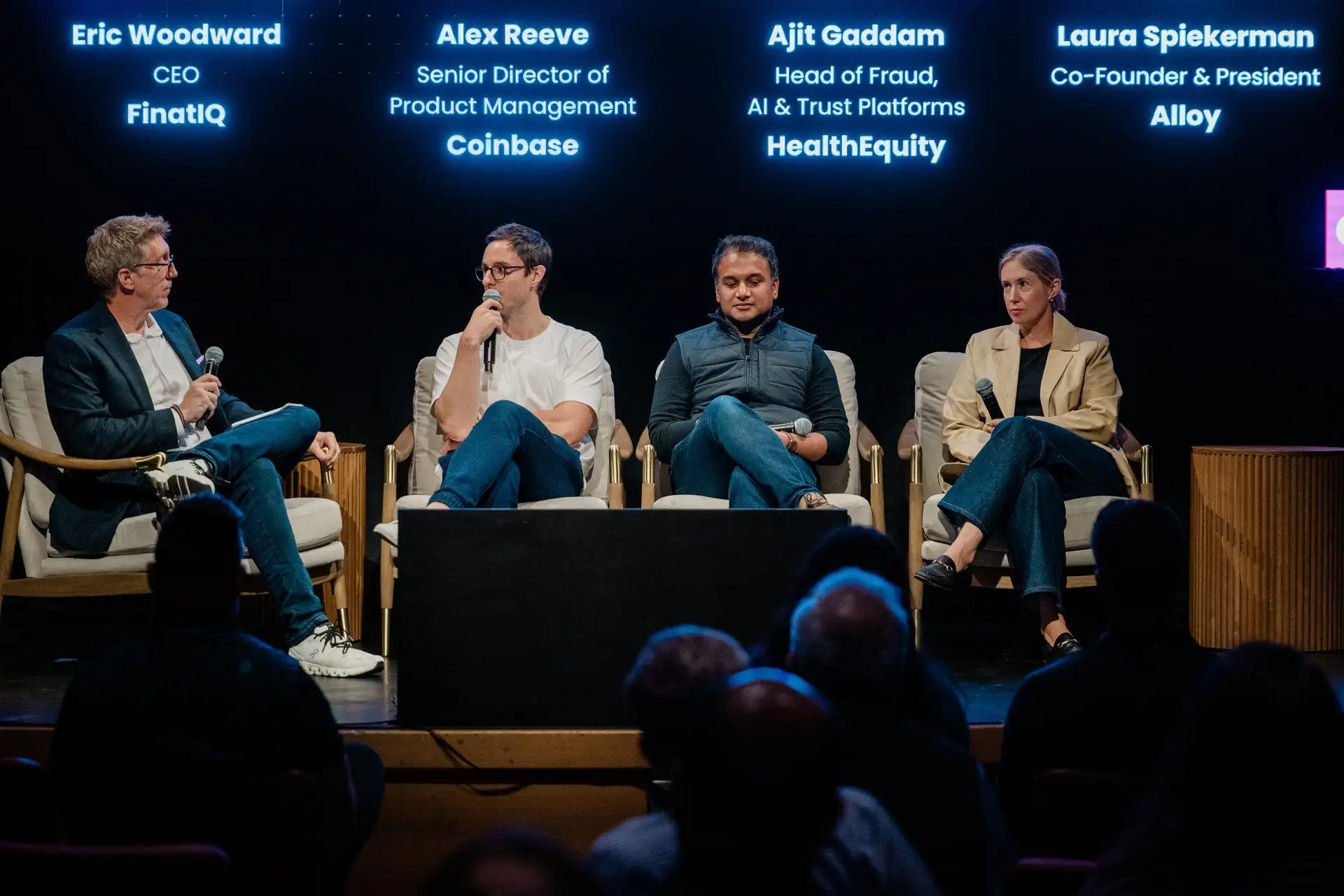
Many of the biggest banks are saying no for now. Laura Spiekerman of Alloy noted that several banks have updated their terms to put anything an agent does on the customer, and some are blocking known agents outright. Smaller banks and fintechs are going the other way, and some are already letting agents make real decisions. The panel’s view: the institutions that open up first could be the ones agents start recommending.
Shoppers are moving just as fast. Coinbase's Alex Reeve moved his own online shopping from Amazon to Walmart in three weeks, because Amazon blocks his agent. His rule:
"You either have to own the UI or you have to be the enabler of an agent experience."
Ajit Gaddam of HealthEquity was candid about how much harder fraud has gotten. AI makes fakes easier to produce and harder for even well-trained teams to spot. His team’s answer was bold: go fully passwordless with passkeys. He admitted the switch took real customer education, since plenty of people had never heard of a passkey. But it made a whole class of account takeover far harder to pull off.
4. Who pays when an agent gets it wrong?
Put a payments panel on the question of agents doing the buying and you get the liveliest session of the day. The Future of Payments: Global, Tokenized, Verified brought fintech author Dave Birch, Intuit's Sebastien Taveau and Lightspark's Christina Potter together with VGS's Melissa Shields, and the conversation kept coming back to the question every payments leader is wrestling with right now: when an agent makes the purchase, who’s accountable?
Payments used to have two parties and decades of rules about who eats a loss. Agents bring in more: the agent platform, the model underneath it, the wallet it pays from. When something breaks, it's not clear today who's on the hook.

And things will break. Sebastien predicted a new kind of friendly fraud:
"My agent did it, but that's not what I asked him to do six months ago."
Dave Birch took it a step further:
"The margin will migrate to the intent."
Whoever holds what you told your agent holds the economics.
5. The fraud prevention playbook needs to be rewritten
To close the day, Audrey Kim of Oak HC/FT asked PayPal's Harsh Dev, Spinwheel founder Tomás Campos and Prove CEO, Rodger Desai, for predictions they'd put their names on. Predictions for the Next Era of Commerce delivered, and one theme ran under all of them.
Most fraud models learned from people. How you hold your phone. How fast you type. The Costco run every Sunday. Agents do none of that. They run on servers, hop between machines and act whenever the deal shows up.
Rodger summed it up:
"Everything agents do will effectively be out of pattern."
Harsh added a detail that shows how early this is. By his count, the UCP protocol lists just two approved risk signals so far: agent ID and IP address. The fix the panel kept landing on was a cryptographic link from every agent back to a real person.
There was a business lesson too. Rodger shared what a major retailer told him recently: simply knowing an agent showed up costs them money and doesn’t help them sell. What would help is an agent that arrives ready to buy, for example, if they are already approved for the retailer’s financing. That’s the shift Rodger wants the industry to make, from knowing the agent to funding it.
Tomás added a warning for any business counting on customer inertia. Once an agent can compare every option in a minute,
“friction being a moat is no longer a thing.”
Trust that travels, and a room that delivered

By the end of the afternoon, the questions hadn’t gotten any easier. But the room had more energy than when we started. Panelists kept talking well past their time slots, lunch turned into a dozen side conversations about agents and fraud, and the hallway debates carried right into the evening reception overlooking the Bay Bridge.
That’s what Improve is for. Identity leaders, fraud fighters, payments professionals and builders sat in one room and worked through problems none of them can solve alone. We heard from leaders at Meta, Uber, PayPal, Coinbase and more. And everyone walked away with insights.
A few things did feel settled by the end of the day. Agents are already here. Blocking them only buys time. And whatever trust looks like next, it has to trace back to a real person. As Rodger put it:
“"Identity used to be a checkpoint. Now it's a key. When trust travels with the customer and their agents, businesses stop starting from zero and start growing." ”
Thank you to every speaker, sponsor and attendee who made our first Improve on the West Coast one to remember. We’ll see you at the next one.
The modern
way of proving identity
Trusted by 2,000+ leading companies to reduce fraud and improve consumer


Keep reading
 Read the article: Black Friday's Hidden Tax: The True Cost of OTP Authentication
Discover the hidden costs of OTP authentication during Black Friday. From rising SMS expenses and checkout friction to fraud risks, and learn how Unified Authentication can reduce them.
 Read the article: Prove Introduces T-Mobile MVNO Indicator for More Precise Fraud Detection
New T-Mobile MVNO Indicator brings greater precision to fraud detection, helping businesses identify risk without introducing unnecessary friction for legitimate customers.
 Read the article: Prove Brings Together Industry Leaders to Tackle Trust Challenges in AI-Driven Payments
TikTok, Velocity, Worldpay and others convene to address emerging risks across identity verification, agentic liability, and the future of payments