What is Check Fraud? Learn How it Works and How Banks are Fighting Back
Learn what check fraud is, how it works, and how banks are using innovative ways to eliminate check fraud activity.


Check fraud is a complex crime that thrives on deception and exploitation of vulnerabilities in our financial system. It typically begins with criminals establishing a network of fake bank accounts, often called "mule accounts," to hide their true identities.
They achieve this by either stealing personal information from data breaches and assuming the identities of real people or by creating entirely new, synthetic identities by combining bits of real and fabricated data. The dark web, unfortunately, thrives as a marketplace for this kind of stolen information, making it readily available to fraudsters.
Once these fraudulent accounts are set up, the criminals need to acquire checks. This can involve purchasing stolen or counterfeit checks on the black market or resorting to more direct methods like stealing mail. Thieves may "fish" envelopes out of post boxes or even steal mailbox keys, leading to a concerning rise in violence against mail carriers.
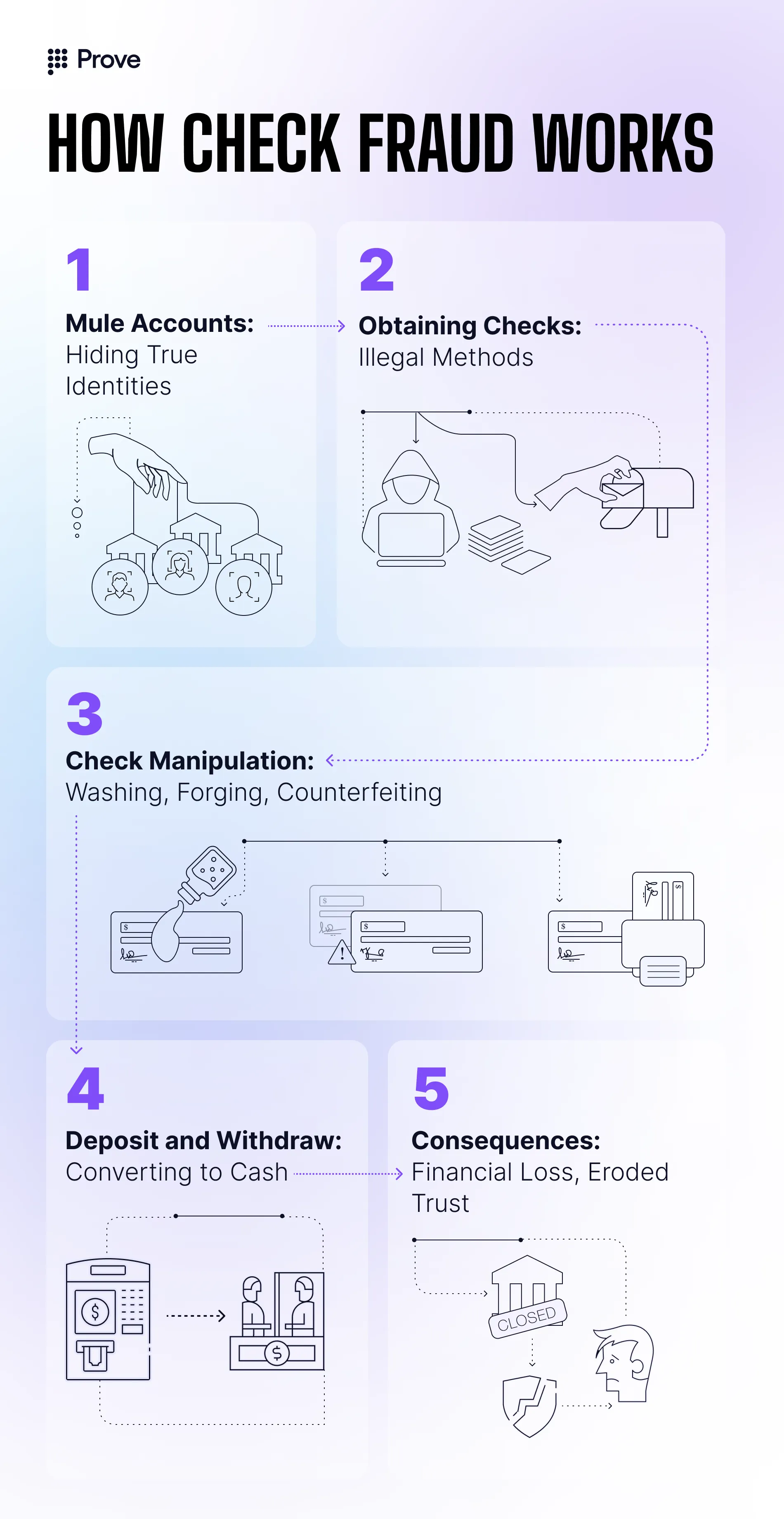
With checks in hand, the fraudsters employ various techniques to alter them for their gain. They might use chemicals to "wash" the ink off stolen checks and rewrite them with new payee information and inflated amounts. Alternatively, they might simply forge endorsements or use sophisticated printing methods to create convincing counterfeit checks.
The final stage involves depositing these fraudulent checks. Criminals exploit various channels, including ATMs, mobile banking apps, and even bank branches, to quickly convert the stolen checks into cash. This allows them to disappear with substantial sums of money, leaving behind a trail of financial losses and eroded trust in the banking system.
The consequences of check fraud are felt through financial and reputational losses. When customers fall victim to fraudulent check activity, it erodes the trust and affinity they have for brands that cannot provide a safe operating environment. As a result, it can severely tarnish a company’s brand image, it disrupts customer service and creates negative experiences, all of which lead to frustration and inconvenience.
The complexity and evolving nature of check fraud pose a significant challenge for financial institutions and individuals alike. It demands a multi-faceted approach to prevention, including robust identity verification measures, advanced fraud detection systems, and increased awareness among consumers and businesses
The Anatomy of Check Fraud: A Step-by-Step Breakdown
Check fraud is a multi-stage process that exploits vulnerabilities in both the physical and digital worlds. Here's how it typically unfolds:
1. Creating "Mule Accounts"
To conceal their true identities, criminals establish numerous fake bank accounts, often referred to as "mule accounts." This involves either:
- Stolen Identities: Using personal information stolen from data breaches or other sources to open accounts in the names of real individuals.
- Synthetic Identities: Combining fragments of real and fabricated information to create entirely new, fictional identities.
The dark web provides a readily available marketplace for stolen data, making this step relatively easy for fraudsters.
2. Obtaining Checks
Criminals acquire checks through various illicit means, including:
- Dark Web Purchases: Buying stolen or counterfeit checks on online black markets.
- Mail Theft: Stealing checks directly from mailboxes, often resorting to "fishing" envelopes out of post boxes or even stealing mailbox keys. This has led to a disturbing increase in violence against mail carriers.
3. Altering and Depositing Checks
Once the checks are in hand, criminals employ several tactics:
- Check Washing: Using chemicals to erase the ink on stolen checks and rewriting them with fraudulent details.
- Forging Endorsements: Adding their own names as payees to stolen checks.
- Creating Counterfeit Checks: Using sophisticated printing techniques to produce fake checks that closely resemble legitimate ones.
The fraudulent checks are then deposited through various channels, such as ATMs, mobile banking apps, or even in person at bank branches. This allows criminals to quickly convert stolen checks into cash.
Check fraud results in significant financial losses for individuals and businesses, erodes trust in the banking system, and fuels criminal activity. It's crucial for financial institutions and consumers to be vigilant and take proactive steps to protect themselves from this evolving threat.
To learn more about preventing bank check fraud and other types of fraudulent activity, read more.
The modern
way of proving identity
Trusted by 2,000+ leading companies to reduce fraud and improve consumer


Keep reading
 Read the article: Prove Unveils Inaugural Trust 25 Honoring Leaders from Citi, Bank of America, and Uber
Prove has launched the Trust 25, an inaugural recognition program for 25 executives from top firms like Citi and Uber who are advancing digital identity and fraud prevention in the AI era.
 Read the article: Prove Unveils The Trust 25, Recognizing Leaders From Uber, Citi, PayPal, Visa, and 20+ Other Organizations Solving the Hardest Problems in Digital Identity
Prove announces the 2026 Trust 25, honoring 25 leaders from Uber, Citi, PayPal, Visa and more advancing digital identity, fraud prevention and AI-driven trust.
 Read the article: Prove Unveils The Trust 25, Recognizing Leaders From Uber, Citi, PayPal, Visa, and 20+ Other Organizations Solving the Hardest Problems in Digital Identity
Honorees span banking, payments, gaming, and technology, reflecting the breadth of industries now confronting AI-driven fraud, authentication, and the rise of AI agents


