ClickCease

When Bots Look Human: A Checklist for Marketplace Trust


When Bots Look Human: A Checklist for Marketplace Trust
Marketplace Risk Management Conference · San Francisco · May 2026

When Bots Look Human:
A Checklist for Marketplace Trust

Rebuilding trust across the marketplace transaction journey

The evolving threat landscape
01
Bots and AI attacks have moved beyond the login screen — the full transaction lifecycle is now the attack surface, including promotions, customer support channels, and refund flows.
02
Telephone and identity bots probe every entry point. If the company has an entrance, attackers will exploit it.
03
Promotion abuse, teleport fraud, and AI-generated false refund images are significant and growing attack vectors in delivery marketplaces.
04
Both individual actors and coordinated fraud rings are active simultaneously — defenses must be built to handle attacks at every scale.
Identity verification & continuous trust
05
Point-in-time onboarding verification is no longer sufficient — fraud continues even after initial IDV checks pass.
06
Reverification at meaningful moments in the user journey has matured over the last 12–24 months and is now deployable at global scale.
07
Segmenting fraud signals and building dynamic models from captured data points outperforms static rule sets.
08
Treat every fraud incident as a model-building trigger — turn each fire into a signal that helps prevent the next one.
Internal buy-in & measuring ROI
09
Measure post-incident silence — if the platform stays quiet after a fix, that quiet is itself a success metric and a future budget argument.
10
Turn incidents into success stories. Any post-mortem that ends without clear action items is not a win.
11
Frame fraud ROI as PnL, not insurance — measure how much you saved, not just how much you spent. Understand triggers and losses in financial terms.
12
Risk appetite conversations need the right timing in the budget cycle — quantifying future losses is uncomfortable but essential for proactive investment.
Regulation & global operations
13
Build compliance in from day one — fraud prevention by design means GDPR, DSA, and emerging regulations become table stakes rather than reactive constraints.
14
Work closely with law enforcement and financial regulators on deepfake fraud — those relationships must be established before a crisis, not during one.
No items found.

Keep reading

See all blogs
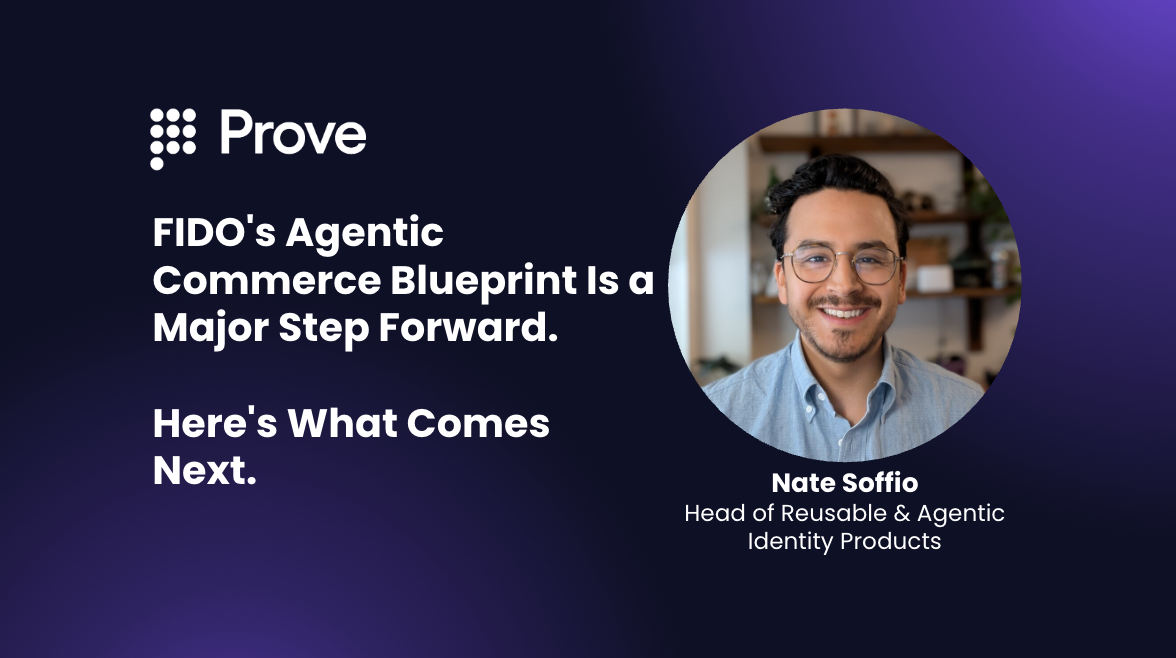
Read the article: FIDO's Agentic Commerce Blueprint Is a Major Step Forward. Here's What Comes Next.
Blog
FIDO's Agentic Commerce Blueprint Is a Major Step Forward. Here's What Comes Next.

The FIDO Alliance’s new standards for agentic commerce mark a major step toward trusted AI-driven transactions, but they leave a critical question unanswered: how to verify the real identities behind AI agents. This article explores the gaps in AP2 and Verifiable Intent (VI) protocols and why foundational identity infrastructure will determine whether agentic commerce can scale securely.

Blog
Read the article: Prove and Velocity Partner to Close the Trust Gap in the Global Stablecoin Economy
Company News
Prove and Velocity Partner to Close the Trust Gap in the Global Stablecoin Economy

Prove and Velocity have partnered to bring trusted identity verification to the global stablecoin economy, helping enterprises, banks, and payment providers enable secure, compliant cross-border payments and treasury operations.
Company News
Read the article: Spinwheel Launches New Credit Data AI Lab; Announces Prove as Founding Partner to Support Agentic AI Innovation for Financial Institutions and Fintechs
Company News
Spinwheel Launches New Credit Data AI Lab; Announces Prove as Founding Partner to Support Agentic AI Innovation for Financial Institutions and Fintechs

Spinwheel’s Credit Data AI Lab also integrates with Prove’s industry-leading identity platform to anchor on a foundation of trusted identity.

Company News