How to Drive More Revenue Using Identity Pre-Fill Technology
Interested in learning more about how your company can improve your customer experiences and secure onboarding by pre-filling identity? Download our detailed white paper, Leveraging Modern Identity - Drive Revenue, Not Abandonment.



With consumer expectations at an all-time high when it comes to fast and easy digital experiences, every second and field counts when you’re trying to get new customers to sign up for your services. At the same time, companies need to protect their “front doors” against account opening fraud and other onboarding scams. With so much riding on making onboarding both seamless and secure, it’s important for companies to understand how they can leverage modern identity verification and authentication technologies to not only mitigate common forms of identity fraud but also to improve the customer experience and drive more revenue.
Application Abandonment is an Industry-Agnostic Issue
The impact of sub-optimal customer experiences resulting in abandonment of engagement is a problem faced by many industries, including e-commerce, financial services, insurance, and healthcare. Consumers will abandon application processes if they are too cumbersome or time-consuming. Failing consumer engagement and abandonment can pose a serious threat to organizations and significantly impact their revenues. As per The Remarketing Report by SalesCycle, the average abandonment rate across industries was close to 77%.
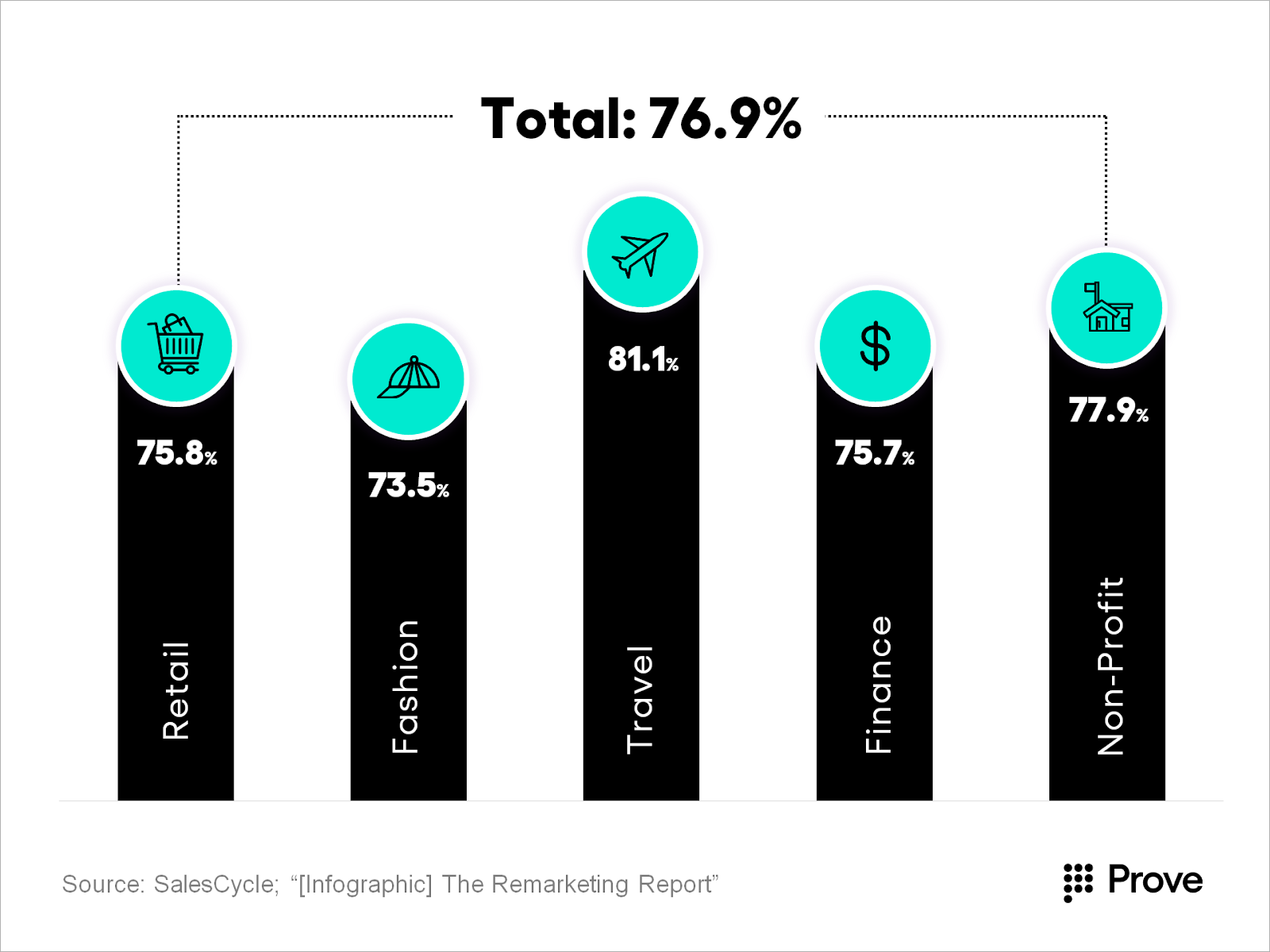
E-commerce: When purchasing on an e-commerce website, consumers expect a quick and smooth checkout experience. Unfortunately, most checkout experiences are marred by cumbersome flows and too many keystrokes & clicks, often leading to transaction abandonment. In a single year, cart abandonment is responsible for USD 4.6 trillion in lost e-commerce sales, with abandonment rates averaging nearly 76%.
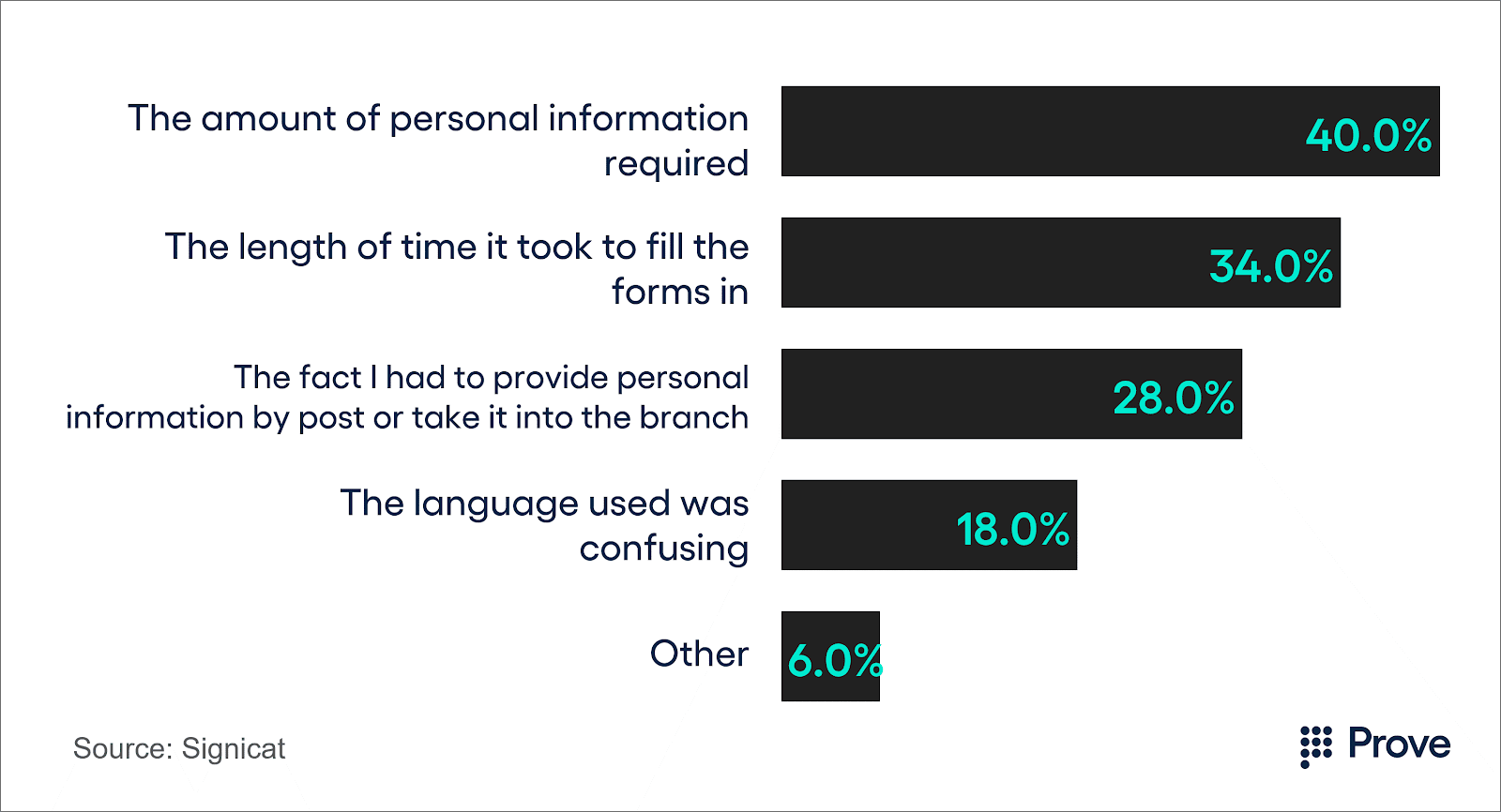
Financial Services: When it comes to financial transactions, inevitably, security becomes an added layer in all transactions. However, in addition to protection from identity takeover, consumers demand a frictionless application service that operates seamlessly and in real time. Consumers who have to go through lengthy and cumbersome application-filling tend to abandon the application altogether. According to a study by Signicat, two-thirds of European consumers abandoned digital banking applications in 2020. Apprehensions related to security, the amount of personal information to be keyed in, and the time taken to fill forms were the top reasons for abandonment as per the study.
Healthcare: When it comes to accessing healthcare, patient registration is often the first experience that a person has with a healthcare provider. With most providers, this process is currently manual and paper-based. Lack of adequate personal information collected at the time of registration also poses subsequent contactability challenges. This process can, however, be digitized and be made simpler and faster for the consumer.
The bottom line is that consumers strongly dislike filling out forms or entering lengthy personal information manually in an online application. It is this dislike coupled with security concerns that contributes to abandonment.
Building a Simple and Secure Consumer Experience with Prove Pre-fill
Prove Pre-fill is a solution that can simultaneously solve application abandonment and security issues associated with consumer applications. Pre-fill techniques reduce the burden of filling out an application by pre-filling it with authenticated and verified data. In addition to reducing the friction in the form-filling process, it also mitigates identity fraud and minimizes the need for costly manual reviews.
The efficacy of pre-fill hinges upon the accuracy of the data being filled. Legacy data sources carry the risk of providing stale data as they might be incomplete and not current. Thus, they are also an easy target for fraudsters who leverage them to create synthetic identities. An alternative and effective method of validating identity leverages the power of phones and phone numbers. Pre-filled identities can be sourced and verified using Phone-Centric Identity information linked with other data sources strong enough to meet KYC requirements for financial institutions and regulatory requirements for different industries. The result is pre-filled data that is highly accurate and privacy-focused as the consumer is in full control of pre-filling vs. not pre-filling. When pre-filling information with phone-based identity techniques, the identity authentication, and verification should follow these three NIST SP 800-63 digital identity checks:
P: Passively prove possession of the phone
R: Assess the real-time reputation of the phone (tenure and behavior)
O: Definitively prove ownership of the phone line
The Possession, Reputation, and Ownership (PRO) methodology also ensures that data is secure and unique, making it difficult for fraudsters to create synthetic identities.
Overall, by pre-filling data with Phone-Centric Identity and adopting the PRO model of authentication and verification, organizations can increase the number of new accounts, reduce the cost and time spent on manual operations, reduce fraud incidents, and generate customer loyalty.
Book a Prove Pre-fill™ Demo below
The modern
way of proving identity
Trusted by 2,000+ leading companies to reduce fraud and improve consumer


Keep reading
 Read the article: CLARITY Act could allow 11 crypto activities for US banks
The Congressional Research Service has identified 11 categories of crypto activities that the Senate-reported CLARITY Act would permit for U.S. banking organizations and credit unions, including digital asset underwriting and dealing.
 Read the article: Insurance Fraud Has a Contact Center Problem
Fraudsters can use the contact center to impersonate policyholders, manipulate accounts, and redirect claims or benefits. Learn how Prove for Amazon Connect brings stronger identity intelligence into contact center journeys to help insurers reduce fraud and friction.
 Read the article: Why We Must Close Identity Gaps Before AI Agents Start Transacting
Prove's Frances Zelazny says that we need to fix the identity systems people rely on today before trusting them to support what comes next.


