Exploring New Frontiers in Biometric Security: Insights from Prove’s Global Identity Officer Tim Brown
In an ever-evolving digital landscape, biometric technology has revolutionized how we authenticate and secure our online identities.

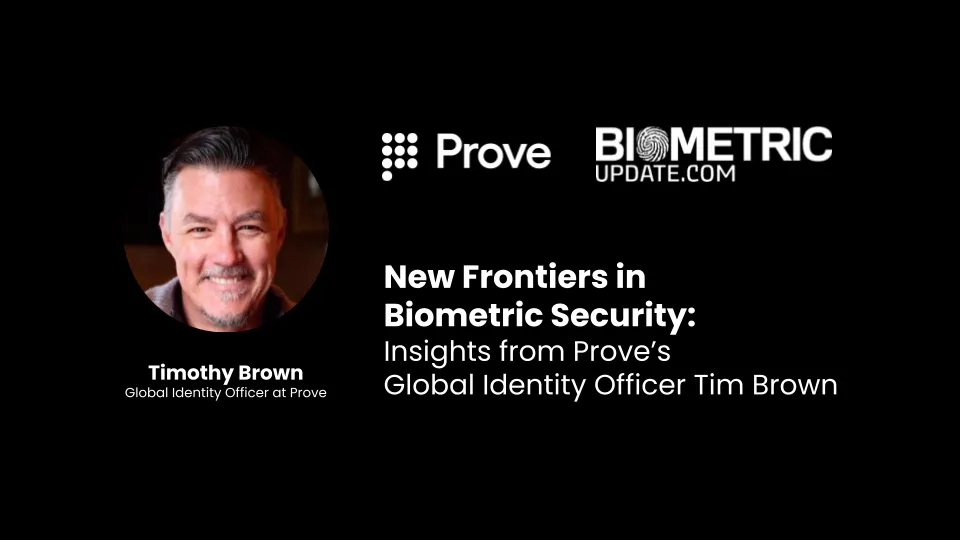
In an ever-evolving digital landscape, biometric technology has revolutionized how we authenticate and secure our online identities. But with the rise of sophisticated cyber threats, is relying solely on biometrics enough to protect against fraud? Tim Brown, Global Identity Officer at Prove, recently shared his insights on this pressing issue in an article for Biometric Update.
In his piece, Brown delves into the emerging risks posed by advanced cyber threats, such as deepfakes and digital injection attacks, which are capable of bypassing traditional biometric systems. He emphasizes the need for a multi-layered approach to security that goes beyond biometrics to ensure robust protection in the face of these challenges.
Brown also highlights promising new technologies, including device intelligence and AI-driven solutions, that can help mitigate these risks and offer safer, more user-friendly authentication methods. As the financial industry grapples with increasingly complex fraud tactics, the time is ripe for innovation and vigilance.
To explore Brown's full insights on the future of biometric security, read the article on Biometric Update here.
The modern
way of proving identity
Trusted by 2,000+ leading companies to reduce fraud and improve consumer


Keep reading
 Read the article: Traceable evidence will form the basis of AI agents: Authenticate 2026 speakers
Experts from Consult Hyperion, Prove, NIST, iProov identify biometric binding, liveness among key tools
 Read the article: Rodger Desai on Continuous Identity and Trust in the AI Era
In this interview with Investment Reports, Prove Founder and CEO Rodger Desai explains how AI is changing identity and fraud prevention, why trust must be continuous, and how cryptographic binding can help secure human- and agent-led transactions.
 Read the article: What's Next for Payments & Crypto? 5 Insights from Visa, PayPal, Amazon, Stripe, and More
Explore five payments and crypto predictions for 2027 from Trust 25 leaders, covering stablecoins, AI agents, fraud prevention, digital identity, and payment security.