Let’s Talk about Business Banking Problems and Innovative Solutions
Users are always looking at those products that save their time and meet their specific needs.



Traditional banks use one-size-fits-all platforms that employ processes/technology usually built for retail banking, overlooking customer experience in the business banking segment. The business customer experience goes for a toss, making simple tasks complex. Meanwhile, demand/expectation from tech startups and new-age businesses seeking to automate and integrate banking into their business is growing. Users are always looking at those products that save their time and meet their specific needs. It is time to look at business banking innovation carefully. Here are two companies focusing on this segment as examples and acting as disruptors for the traditional banking industry.
SEED

SEED, part of the Winter 2015 Y Combinator class, wants to bring banking into the API arena and eradicate many typical irrelevant fees. SEED has launched a banking API to allow its beta customers to integrate SEED’s financial service into their apps and tools. These financial services are currently available only in the US. SEED offers modern, efficient, and secure mobile & Web applications for online banking.
SEED will provide all of the core business banking services for businesses, all available online without the need for paperwork or cumbersome processes. For security purposes, SEED offers up to $50 million of FDIC insurance instead of the $250,000 offered by traditional banks. To help businesses save money, SEED offers free domestic wire transfers, free ACH transactions, free check sending, and low-cost international payments.
SEED’s platform enables seamless integration with other business services and will act as a marketplace for offering competitive lending, credit, and insurance products from a community of providers.
The company has recently raised $5 million from an incredible group of investors. Here are the investors: Y Combinator, SV Angel, Pejman Mar Ventures, CrunchFund, Cyan & Scott Banister, Hamid Barkhordar, and Bobby Yazdani, General Catalyst Partners, Tomer London, and Josh Reeves from Gusto, Fred Ehrsam from Coinbase, Max Mullen from Instacart, Aaron Levie from Box, Jeremy Stoppelman from Yelp, and Joe Lonsdale from Palantir, Addepar, Formation 8 and many others.
Holvi

Holvi, founded in Helsinki in 2011, is conquering the European banking landscape and reshaping financial technology services with a strong focus on Germany and Austria next. The core of Holvi’s service is the current account which is built for managing a business. The accounts are easy to open and use. It has basic SME tools built-in, including an online shop, an invoicing tool, and financial reporting features.
Users can associate multiple different accounts to their profile, allowing you to see the status of your finances at a glance. It allows users to manage invoices and run an online shop in a single, integrated platform.
The modern
way of proving identity
Trusted by 2,000+ leading companies to reduce fraud and improve consumer


Keep reading
 Read the article: Insurance Fraud Has a Contact Center Problem
Fraudsters can use the contact center to impersonate policyholders, manipulate accounts, and redirect claims or benefits. Learn how Prove for Amazon Connect brings stronger identity intelligence into contact center journeys to help insurers reduce fraud and friction.
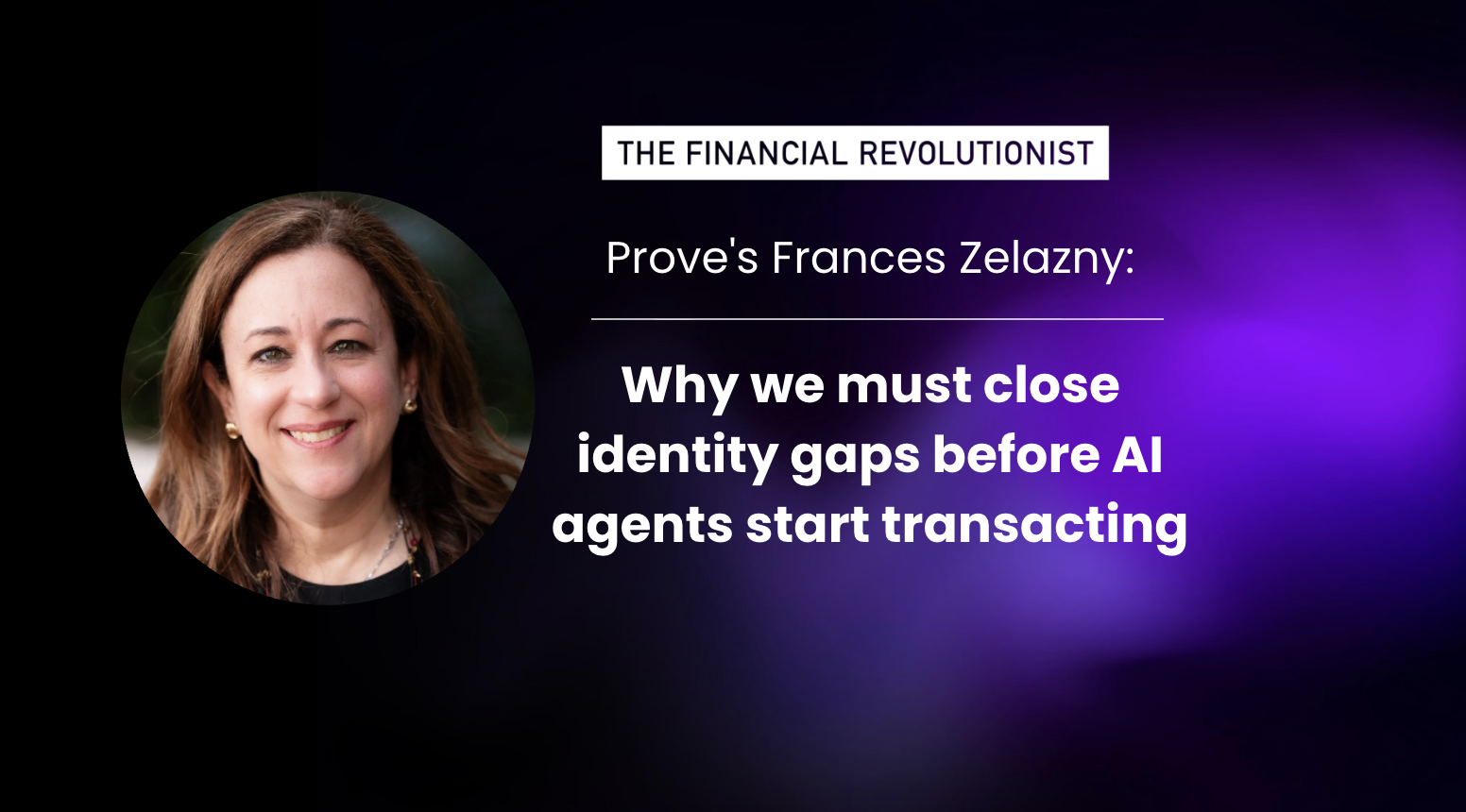 Read the article: Why We Must Close Identity Gaps Before AI Agents Start Transacting
Prove's Frances Zelazny says that we need to fix the identity systems people rely on today before trusting them to support what comes next.
 Read the article: Prove Extends Silent Authentication to Wi-Fi and Mobile Web, Removing a Longstanding Limitation in Digital Identity
Prove extends SIM-based silent authentication to Wi-Fi and mobile web, enabling cryptographic device possession without SMS OTP and expanding seamless authentication across more digital interactions.


