Beyond the OTP: Why SMS-Based 2FA Is Failing and What Comes Next
Explore the classic conflict between security measures and user friction.

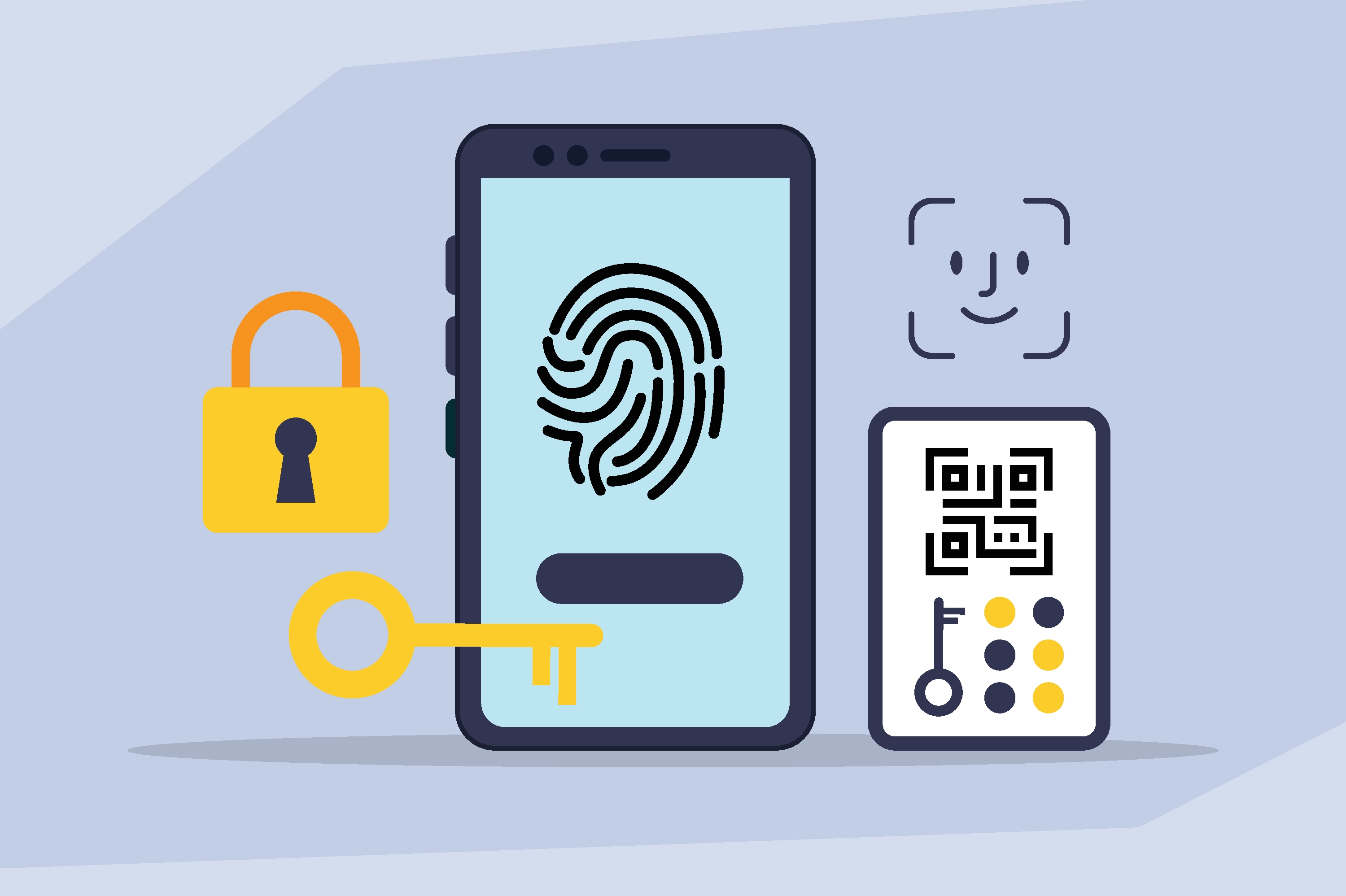
For over a decade, the SMS-based one-time password (OTP) has been the workhorse of two-factor authentication (2FA). It's ubiquitous, it's cheap, and for most users, it feels secure. However, the trust we've placed in SMS OTP is cracking under the weight of its own inherent flaws and the increasing sophistication of modern fraud.
The reality is that SMS OTP was a solution born out of convenience, not security. Nevertheless, businesses continue to use it despite its risks, forcing companies to choose between security and user experience.
This blog explores significant vulnerabilities of the OTP ecosystem, ranging from its foundational weaknesses to the active exploits that target it daily. Additionally, it outlines the philosophical and technological shift needed to move beyond it: from a flawed proxy for possession to a robust model of actual, deterministic possession.
The Rise of a Flawed Standard
To understand why OTP is failing, it is essential to recognize how it became the standard. It started with the inherent weakness of passwords: they're easily forgotten, reused, and compromised in breaches. The initial evolution was the physical token, a device that generated a one-time code. While secure in principle, these tokens are a logistical and user experience nightmare. They represent a constant, tangible friction point: another item to carry, another battery that needs to be charged, another source of panic when lost. Forgetting a token means being completely locked out. When that happens, fixing it requires costly processes like overnight shipping for replacements. Maintaining it demands a support system that is a major burden for businesses.
The smartphone changed all of this. As texting became a global standard, SMS emerged as a frictionless proxy for the physical token. Every user has a phone, making SMS the path of least resistance for deploying a second factor. It is easy, and everyone knows how it works. However, this convenience masked the fact that the SMS protocol was never designed for security.
Why SMS OTP Isn't Built for Modern Security
The core issue with SMS OTP isn't bugs; it's the features of the underlying telecommunications ecosystem.
The system was designed for message delivery, not confidentiality. SMS messages are transmitted in clear text. Anyone with privileged access to the carrier ecosystem, from the mobile carriers themselves to third-party aggregators, like Twilio or Telesign, can read the content of these messages.
The ecosystem is also vast and complex. A single SMS can pass through multiple networks and systems, each representing a potential point of compromise. A bad actor with enough money and motivation can even register as a carrier to participate in the Signaling System 7 (SS7) routing system. SS7 is the global network protocol that allows phone networks to exchange the information needed to connect calls and texts. A vulnerability within this decades-old system allows attackers who gain access to it to redirect messages, giving them the ability to intercept text messages without ever touching the user's device. This is a structural vulnerability of the global telecommunications network.
How Fraudsters Actively Exploit SMS OTP
While the SMS protocol itself is weak, the most devastating exploits target the people and processes that manage it. These attacks have become supercharged by the low cost of modern tools and are now deployed on a massive scale.
Carrier-Level Exploits (SIM Swapping)
The most well-known attack is the SIM swap scam. After doing reconnaissance on a high-value target (often gathering personal data from previous breaches to answer security questions), a fraudster socially engineers a mobile carrier's customer service representative. The fraudster then convinces the representative to port the victim's phone number to a new SIM card controlled by the attacker.
The fraudster, pretending to be the legitimate user, simply says, "I need to shift my phone service over to my new SIM card." After using personal details to pass security checks, the provider deactivates the victim's SIM and activates the fraudster's. Once the swap is successful, the attacker, not the user, receives all incoming SMS messages, including OTPs. While carriers have implemented some controls, this remains a significant risk.
User-Level Exploits (Direct Social Engineering)
Even more prevalent is the direct social engineering of the end user, which has surged in popularity due to the cheap availability of Voice over Internet Protocol(VoIP) phone numbers and mass communication tools.
The scam is simple and effective:
- The attacker gains access to a user's primary credentials, such as their username and password, from a data breach.
- They initiate a login or transaction, which triggers an OTP to the legitimate user's phone.
- The attacker simultaneously calls the user, spoofing the phone number of their bank or service, and says, "This is Bank of America calling. We've detected fraudulent charges on your account. To verify your identity and stop the charges, we've just sent you a security code. Please read it back to me."
The user, believing they are talking to their bank, reads the OTP aloud, handing the keys to the attacker. Because these scams are so cheap to operate, an attacker needs a success rate of only one in a thousand to net a significant profit.
The Tipping Point: Regulatory and Industry Headwinds
The industry is finally acknowledging that OTP is no longer viable. Regulatory bodies are starting to force a change. For example, the Pennsylvania Gaming Commission has drawn a line in the sand: all forms of OTPs, whether from SMS or an app, must be phased out by January 2027. This decision is likely to influence other regulated industries, such as financial services and fintech.
This move follows years of guidance from standards bodies like the National Institute of Standards and Technology (NIST), which began urging organizations to move away from SMS-based OTPs over five years ago in its Special Publication 800-63B, citing the risk of interception.
When Security and User Experience Collide
If the OTP is so flawed, why is it still in use everywhere? The answer is simple: it works just well enough, and it feels safe to the user:
- It's safer than just a password.
- It's available everywhere, on every phone.
- Users are ingrained in the process; they know it and understand it.
This puts businesses in a tough spot. Roll out stronger, higher-friction security, and users abandon your app. If one bank imposes a difficult new security measure, users will flock to another that offers an easier onboarding process. Users, who are generally not held accountable for financial losses from fraud, almost always choose the path of least resistance.
This creates a powerful statement of user expectation that Daniel Killmer, a Prove SME, perfectly summarizes: "Why don't you guys just know it's me?" Users want security to be passive and invisible.
The Path Forward: A New Authentication Philosophy
The only way forward is a fundamental shift in philosophy. An SMS OTP is not a true possession factor; it's merely a proxy for possession. The industry must move to authenticating based on actual possession factors—the devices and cryptographic keys that are truly bound to a user.
A true possession factor is defined by its inherent, verifiable link to the user. It cannot be easily shared, intercepted, or phished. It's something the user has, not something they are sent. This new model is built on two core tenets, devices and keys:
- Devices: A user's phone, laptop, or smartwatch is a physical object they possess.
- Keys: These are cryptographic solutions that are securely bound to those devices.
A key can be a SIM key, a cryptographic key tied to the physical SIM card in a device. It can also be a passkey; although these have weaknesses as they are often synchronized across accounts, breaking the truly device-bound rule. Additionally, it can be a biometric key, which uses a user's physical presence as a factor.
A Multi-Key Approach
No single key is perfect. Each has strengths and weaknesses:
- Passkeys are convenient but introduce complexity. They can be lost during a device wipe or synced to a compromised cloud account, and their recovery flows often fall back to insecure methods, such as SMS OTP.
- Biometrics offer strong presence verification but can introduce user friction during enrollment and raise privacy concerns for a segment of the user base.
- Device-bound keys are highly secure but present a challenge when a user legitimately gets a new device.
The most resilient solution is a multi-key approach, where the strengths of one key counteract the weaknesses of another. By combining a cryptographic key on the SIM card (possession) with a privacy-preserving biometric check (presence), you can create an authentication experience that is both incredibly secure and completely passive to the user.
This approach allows you to recognize a user through normal lifecycle events, such as getting a new phone, and get them back to a trusted state without ever going back to insecure methods, like SMS OTP.
How Prove Solves the Security-UX Dilemma
The challenge for modern development teams isn't just understanding these individual keys but orchestrating them into a single, resilient system. The Prove platform is designed to solve this exact problem. By incorporating phone-centric identity and a multi-key approach, Prove delivers a passive, silent authentication experience that operates in the background.
This process verifies true possession of the device and SIM without requiring any user interaction, effectively eliminating the vulnerabilities of OTPs while also removing user friction. This allows businesses to stop forcing users to choose between security and convenience, and instead deliver both simultaneously.
Build Your Product, Not a Trust Engine
Piecing together these different technologies (carrier-level authentication, device-bound keys, privacy-preserving biometrics) and making them work seamlessly is an incredibly difficult task. The cost of getting it wrong can be catastrophic; a simple SMS pumping attack, where fraudsters exploit a sign-up form to send thousands of OTPs, can rack up a million-dollar bill over a single weekend.
Prove frees up developers to focus on what they do best: building great products while keeping fraud at bay. If you want to dive into the topic of digital identity even more, check out the ebook "The Future of Digital Identity Verification for Developers." It covers key trends, API best practices, and real examples that can help you turn identity verification into a competitive advantage.
The modern
way of proving identity
Trusted by 2,000+ leading companies to reduce fraud and improve consumer


Keep reading
 Read the article: Prove Unveils Inaugural Trust 25 Honoring Leaders from Citi, Bank of America, and Uber
Prove has launched the Trust 25, an inaugural recognition program for 25 executives from top firms like Citi and Uber who are advancing digital identity and fraud prevention in the AI era.
 Read the article: Prove Unveils The Trust 25, Recognizing Leaders From Uber, Citi, PayPal, Visa, and 20+ Other Organizations Solving the Hardest Problems in Digital Identity
Prove announces the 2026 Trust 25, honoring 25 leaders from Uber, Citi, PayPal, Visa and more advancing digital identity, fraud prevention and AI-driven trust.
 Read the article: Prove Unveils The Trust 25, Recognizing Leaders From Uber, Citi, PayPal, Visa, and 20+ Other Organizations Solving the Hardest Problems in Digital Identity
Honorees span banking, payments, gaming, and technology, reflecting the breadth of industries now confronting AI-driven fraud, authentication, and the rise of AI agents


