Prove’s State of Identity Report Highlights the New Rules of Digital Trust
Prove’s State of Identity Report explores why traditional point-in-time verification is failing and how businesses can transition to a continuous, persistent identity model to reduce fraud and improve user experience.


Key takeaways
- The State of Identity Report reveals why traditional identity checks are failing in today’s digital environment.
- AI-driven fraud and deepfakes require stronger identity solutions beyond legacy authentication methods.
- Continuous identity builds trust over time instead of relying on one-time verification events.
- Cryptographically secure, persistent identity helps reduce fraud while improving digital experiences.
- Modern identity strategies help organizations balance security, growth, and customer convenience.
For much of the digital era, identity systems were built on a simple assumption: once a user passed verification, they could be trusted going forward.
Prove’s State of Identity Report examines how that assumption shaped modern identity, and why it no longer holds.
In the early and mid-2000s, user data was relatively stable, sessions were short, and attacks were slow and manual. Point-in-time identity checks aligned well with risk and helped businesses onboard users and transact online with minimal friction, fueling early digital growth.
Today, digital reality looks very different. User behavior is more fluid, journeys are longer and fragmented, and attackers operate at speed and scale. Yet many identity systems remain anchored to the same static, point-in-time model they were originally designed around.
The consequences of this outdated approach are increasingly costly. Trust is granted early and left untouched as context and risk evolve, pushing organizations to use identity primarily as a defensive control rather than as a foundation for growth.

This is a central finding of the State of Identity Report: modern identity failures are not caused by a lack of verification, but by how trust is granted and maintained over time. Organizations verify users at key moments, then allow that trust to extend far beyond the conditions under which it was earned.
The Report highlights how, when identity is anchored by a persistent, cryptographically secure mechanism that is instant, invisible to the user, and reusable across channels, it becomes a driver of economic activity, enabling more approvals, smoother journeys, and new digital experiences without unnecessary friction.
Increasingly, identity doesn’t fail because organizations stop verifying users altogether. It fails because trust has no mechanism to persist and recalibrate as users, devices, and context evolve.
How Identity Became a “One-and-Done” Control
Early digital identity systems were designed for stability. A user typically was logging on from a single device, a familiar location, and exhibiting predictable behavior. Risk evolved slowly, and so trust could afford to do the same.
As a result, identity controls clustered around a few critical moments. Onboarding became the place where trust was established. Login became the moment it was reaffirmed. Everything that followed—sessions, actions, changes—was implicitly treated as safe.
Over time, “verified” quietly became synonymous with “still legitimate.” Trust froze in place, even if the environment around it shifted.
Our modern digital reality proves that point-in-time identity belonged to a slower era, one defined by static users and human-paced attacks. An era we’ve outgrown.
Identity Is Now in Constant Motion
Modern identity isn’t something that happens in a moment. It unfolds across time.
Real users change constantly; they upgrade their phones, change their numbers, and log in from new locations. Their behavior evolves as products, habits, and circumstances shift. None of this is inherently suspicious; it’s simply how digital life works now.
At the same time, sessions have grown longer but more fragmented. Users stay logged in across apps, devices, and channels. Journeys spill from mobile to web to customer support and back again. Identity doesn’t reset cleanly at login anymore.
And attackers have adapted accordingly. They no longer rush the front door. They wait inside. They watch for moments when trust quietly degrades. When context shifts, when systems hand off control, and when no one is actively looking, attackers are at the ready.
In this environment, identity can no longer be a snapshot. It must be a timeline.
Where One-Time Identity Checks Fail First
When trust is granted once and left untouched, cracks form quickly along the user journey.
Post-login fraud is now one of the most common and costly forms of fraud. Fraudsters take over accounts mid-session or make unauthorized changes while the account is authenticated. Abuse hides behind the appearance of legitimacy.
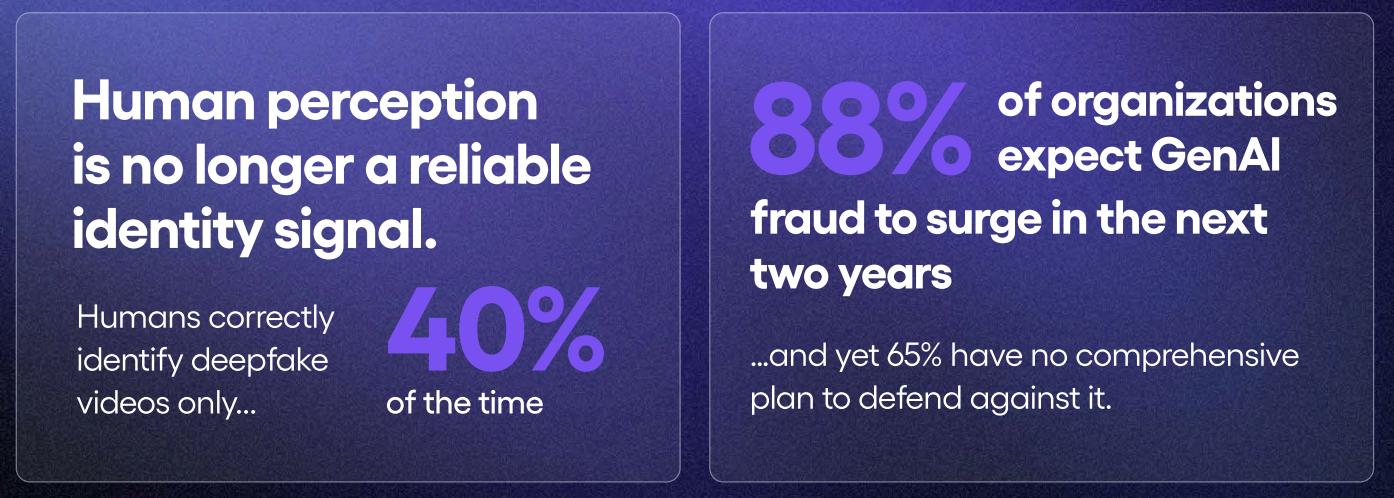
Recovery and support flows are especially vulnerable. Password resets, account recovery, and customer service interactions were designed to help real users—but they’re also ideal surfaces for social engineering once initial access exists. Not to mention, many of the highest-risk actions, like withdrawals, payout changes, and sensitive profile updates, happen long after onboarding has faded into the past.
The pattern is clear: the most damaging fraud doesn’t happen when trust is first established. It happens when trust is assumed for too long.
Why Authentication Alone Can’t Carry the Load
Authentication is essential, but it was never designed to carry trust indefinitely.
At its core, authentication answers a narrow question: Can you log in? Modern identity needs to answer something broader: Are you still the same entity right now?
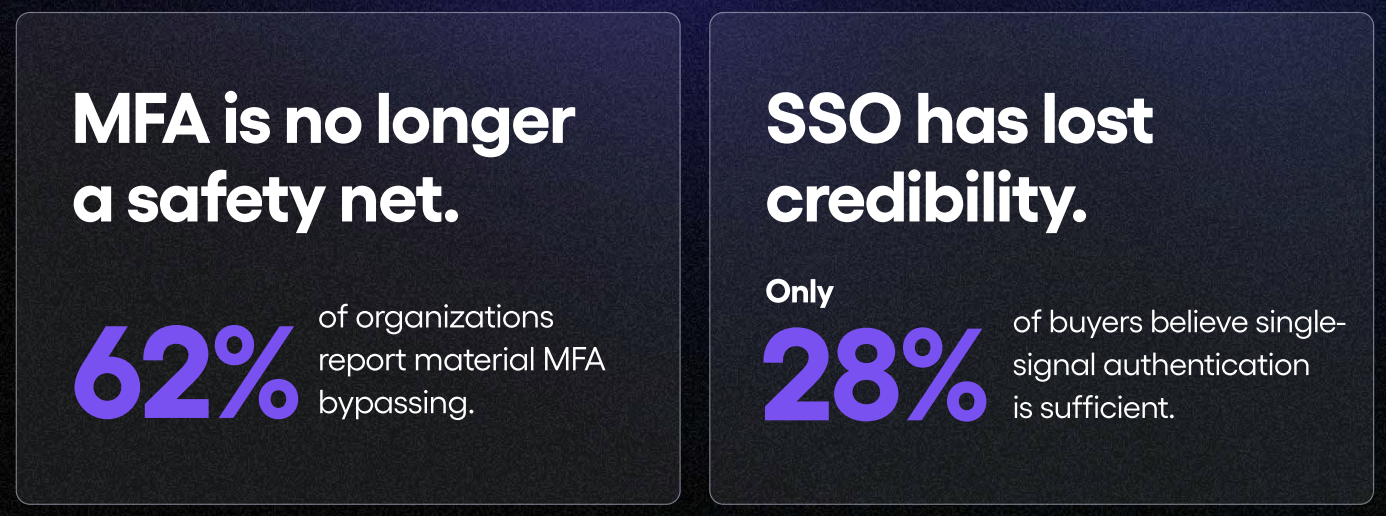
Static factors struggle to answer that question over time. Credentials get reused. MFA gets bypassed. Secrets leak, are phished, or replayed. What once felt strong slowly loses its integrity. Trust doesn’t expire on a schedule, but it does drift. Especially as devices change, behavior shifts, and context evolves.
When identity stops at login, fraud doesn’t disappear. It simply waits.
The Shift: From Point-in-Time to Continuous Identity
The answer to this modern challenge isn’t to add more friction. It’s about adopting a different mindset entirely.
Continuous identity treats trust as something that must be maintained, not as something that is indefinitely established. It relies on tokenization and cryptography that can't be broken. It’s strengthened with tenure and ongoing signals such as presence, possession, and behavioral consistency to quietly assess trust throughout the entire identity lifecycle.
With persistent identity, instead of asking users to constantly re-prove themselves, the validation happens in the background. Friction appears only when risk meaningfully changes. This model aligns with how the world actually works now. Users move. Sessions persist. Risk fluctuates.
Identity systems should do the same.
Modernizing identity isn’t just about stopping bad actors—it’s about unlocking better outcomes for everyone else.
When trust is maintained over time, legitimate users move faster, unnecessary friction disappears, and approvals happen with confidence instead of hesitation. Security and growth can finally stop pulling in opposite directions. Continuous trust reduces fraud and friction simultaneously. With this model, identity becomes more than a control. It becomes infrastructure—something that quietly enables speed, scale, and confidence across the business.
What Organizations Need to Rethink
This shift requires letting go of old assumptions. Identity can’t be a single step in the journey. It has to span the journey. Trust can’t be static. It has to adapt as context changes.
And the core question has evolved, from “who are you?” to “are you still you, right now?”
Identity rarely fails in dramatic moments. More often, it erodes quietly—between sessions, across channels, and during actions no one thought to protect. In a world of persistent sessions, fast-moving users, and adaptive attackers, identity can’t be something you check once.
It has to be something you continuously know.
Download the State of Identity report to understand how identity is breaking down today, and what it takes to build it back.

The modern
way of proving identity
Trusted by 2,000+ leading companies to reduce fraud and improve consumer


Frequently Asked Questions
A report exploring how digital identity is changing and why organizations need new approaches to trust and fraud prevention.
Point-in-time checks struggle as fraud becomes faster, more automated, and driven by AI-powered attacks.
A model that continuously maintains trust by using persistent identity signals instead of relying on a single verification moment.
AI enables more scalable attacks, including deepfakes and automated fraud techniques that challenge legacy identity systems.
Trusted identity helps organizations approve more legitimate users, improve experiences, and support secure digital growth.
Rich Rezek has 20+ years of leadership experience in fintech, fraud prevention, and digital identity. He contributed to the development and exit of three companies valued at over $300m total. He was also foundational in the creation of Zelle Risk Insights to protect real-time payments. He has advised many global top financial institutions in his leadership roles at Prove, Early Warning/Zelle, Socure, ACI/Retail Decisions, First National Merchant Solutions (TSYS).Rich is known for data-driven decision-making, strategic leadership, and a strong technical grasp of financial crime prevention. He follows AI, fraud prevention, and digital transformation trends in fintech.
Keep reading
 Read the article: Trust at Marketplace Speed: Why Authentication Is Becoming Persistent Infrastructure
Learn why marketplace authentication must extend beyond login. Explore how persistent identity, cryptographic possession, and risk-based authentication can help marketplaces prevent account takeover, reduce friction, and maintain trust across the customer lifecycle.
 Read the article: Beyond the OTP: What’s Driving the Next Generation of Authentication in Online Gaming
Learn why online gaming authentication is moving beyond passwords, SMS OTPs, and traditional MFA toward continuous, risk-based trust. Explore how persistent identity, cryptographic possession, device and network intelligence, and adaptive authentication can help gaming operators reduce fraud while creating a more seamless player experience.
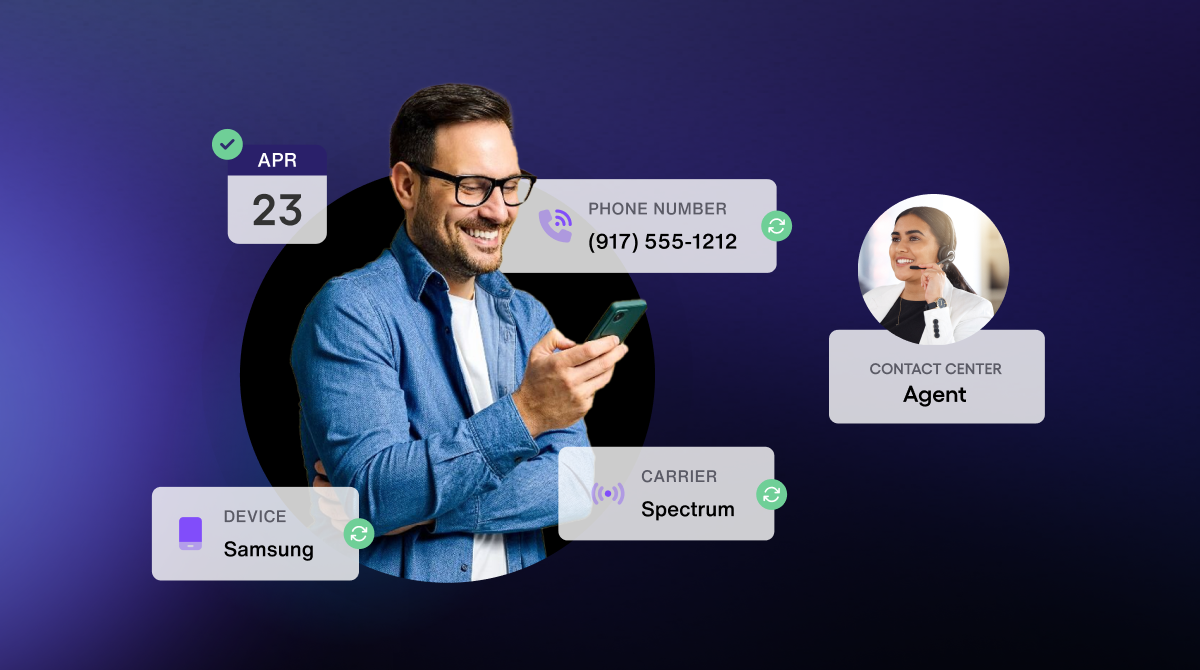 Read the article: Stop Account Takeover Fraud Without Slowing Down Real Customers in the Contact Center
Learn how Prove for Amazon Connect helps banks and insurers prevent account takeover, authenticate callers, reduce handle time, and improve customer experience.


